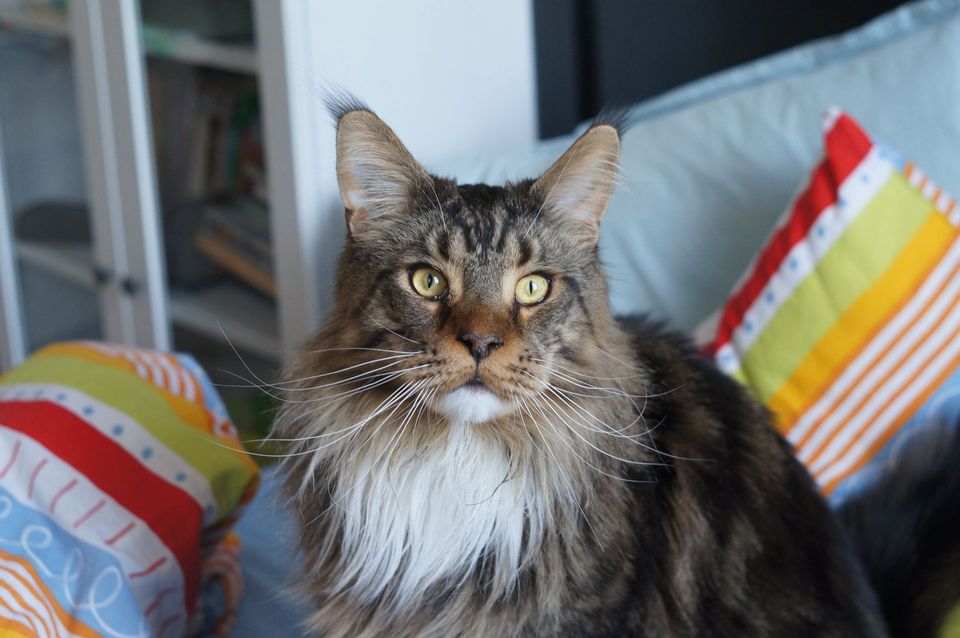
Maine Coon
A large, longer-coated cat that brings practical questions about furniture, grooming and play into the choice of a companion.
- Lifespan
- 9–15 years
- Adult weight
- 4.8–8.2 kg
Getting to know the breed
A large, longer-coated cat that brings practical questions about furniture, grooming and play into the choice of a companion.
Personality in everyday life
A Maine Coon’s size can attract attention before its preferences do. Give visitors a simple rule: invite contact instead of reaching for the cat. Some individuals seek frequent involvement in household activity; others enjoy watching from a familiar place. Neither size nor a friendly reputation removes the need to respect a decision to leave.
Introduce grooming and carrier practice in brief, manageable steps while the cat is comfortable. Waiting until a large adult needs a difficult treatment can make routine care much harder. Ask the previous carer what motivates this individual to play and how it responds when the home becomes busy.
Activity and enrichment
Allow room for interactive play and choose climbing furniture that supports a large cat securely. Observe what this individual enjoys rather than assuming constant sociability.
Home and space
Sketch where resting, play, litter and feeding areas will go. Where can the cat retreat, and how will windows and balconies be secured? Decide who will cover care during absences.
Check the usable dimensions of carriers, litter trays and sleeping places, not just the size printed on the packaging. Scratching posts and climbing furniture need a stable base and room to stretch. Plan how equipment will fit into daily cleaning and travel, and secure windows and balconies rather than relying on the cat’s confidence.
Food and feeding
Before arrival, prepare questions for your vet: which complete food suits the life stage, how should body condition be monitored, and when should portions change? Do not set food grams from a breed name alone.
Large equipment and a larger body do not justify unlimited food. Match the diet to life stage and individual condition, and reassess as the cat matures. Keep a consistent record of weight and appetite so gradual changes are easier to spot. Ask your vet before adding supplements to an already complete diet.
Coat and everyday care
Make regular coat checks part of the week, paying attention to tangles and seasonal shedding. Build tolerance gradually rather than waiting for a difficult mat.
Learning and social life
Ask the previous carer about handling, travel, visitors and other pets. Plan gradual introductions and reward-based learning. Actively supervise children and animals together.
Health and welfare
Request veterinary records and ask which health screening is relevant to this breed and individual. Make a routine-care plan with your vet and budget for unexpected costs. This profile is not a diagnosis.
Before you decide
Compare needs with your time, budget and experience, then meet the individual animal. Who will help during travel or illness? Consider adoption too; a good match does not depend on a pedigree.
Characteristics and everyday care
Broad tendencies, not scores or guarantees about an individual animal. Age, health and variety also affect needs.
- Large cat build
- An editorial planning category, not a score or a guarantee about an individual cat. See the breed guide and assess the animal.
- Engaging daily play
- An editorial planning category, not a score or a guarantee about an individual cat. See the breed guide and assess the animal.
- Regular coat care
- An editorial planning category, not a score or a guarantee about an individual cat. See the breed guide and assess the animal.
General information, not veterinary advice. Talk to a vet about your pet’s individual needs.