Whippet
A lightly built sighthound whose interest in chasing deserves as much thought as its comfortable place to rest.
- Lifespan
- 12–15 years
- Adult weight
- 12.5–13.5 kg
- Height
- 44–51 cm
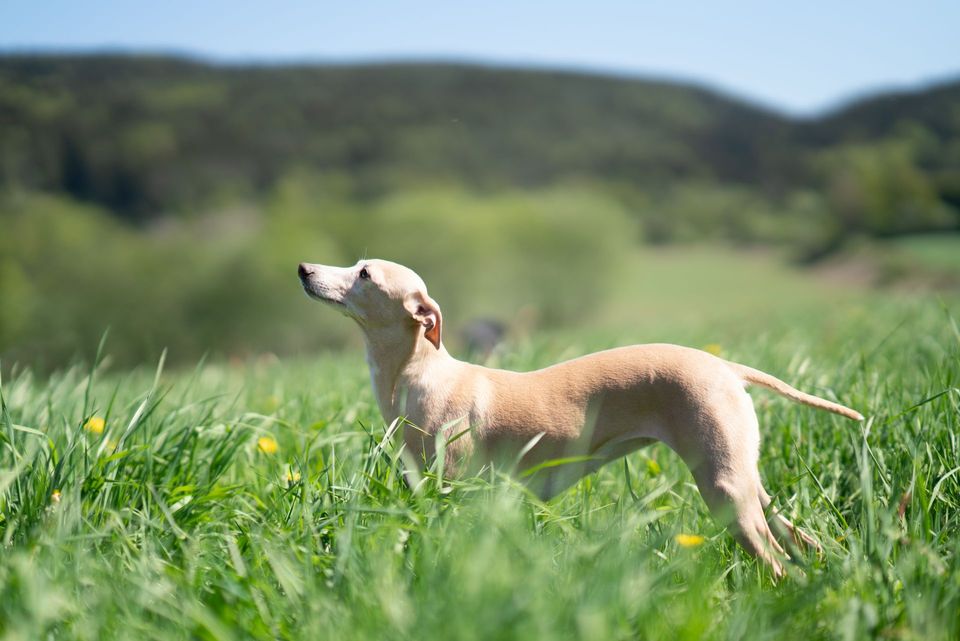
Getting to know the breed
A lightly built sighthound whose interest in chasing deserves as much thought as its comfortable place to rest.
Personality in everyday life
The same Whippet may enjoy a quiet afternoon beside you and become intensely interested when something moves outdoors. These are not contradictory personalities. Plan for both a comfortable resting routine and careful management of exciting situations. A calm appearance indoors is not proof of reliable recall around wildlife.
Practise coming back to you in a secure area and reward checking in during walks. Introductions to cats or smaller pets need an individual plan; never use another animal to test whether a dog will chase. Ask about the actual dog’s experience with handling, visitors and time alone rather than expecting a universally easy companion.
Activity and enrichment
Provide daily activity and choose secure places for running. A chase instinct means off-lead access and introductions to smaller animals need individual assessment.
Home and space
Write down an ordinary working-day plan: outdoor time, rest, learning and company. Floor area and a garden alone do not describe quality of life. Check housing rules and safe walking options.
Prepare a comfortable bed away from drafts and a safe place to rest after activity. Check fences and gates before allowing free access; an apparently quiet dog still needs secure boundaries. Choose walking equipment that fits the individual build and ask a knowledgeable professional for help if it slips or restricts movement.
Food and feeding
Before arrival, prepare questions for your vet: which complete food suits the life stage, how should body condition be monitored, and when should portions change? Do not set food grams from a breed name alone.
Use the individual dog’s build and body condition rather than comparing it with a stockier breed. Discuss a suitable condition with your vet if you are unsure what is healthy for this dog. Include treats in the daily allowance and keep changes gradual instead of trying to alter shape through guesswork.
Coat and everyday care
The short coat generally needs straightforward maintenance. Inspect skin after outdoor adventures and avoid sharp obstacles in exercise areas.
Learning and social life
Ask the previous carer about handling, travel, visitors and other pets. Plan gradual introductions and reward-based learning. Actively supervise children and animals together.
Health and welfare
Request veterinary records and ask which health screening is relevant to this breed and individual. Make a routine-care plan with your vet and budget for unexpected costs. This profile is not a diagnosis.
Before you decide
Compare needs with your time, budget and experience, then meet the individual animal. Who will help during travel or illness? Consider adoption too; a good match does not depend on a pedigree.
Characteristics and everyday care
Broad tendencies, not scores or guarantees about an individual animal. Age, health and variety also affect needs.
- Medium size
- A broadly medium adult build, not a precise weight band.
- Moderate activity needs
- Daily suitable activity is still needed; age and health change the plan.
- Basic coat maintenance
- Usually a simpler coat routine, not an absence of skin, nail, or dental care.
References
General information, not veterinary advice. Talk to a vet about your pet’s individual needs.